Beef Ribs
Smoked beef ribs combine rich beef flavor with a dark, smoky bark and tender meat. Whether you're cooking massive plate ribs or smaller beef back ribs, this guide covers smoker temperature, cook-time planning, the stall, wrapping, wood selection, doneness, and resting before serving.
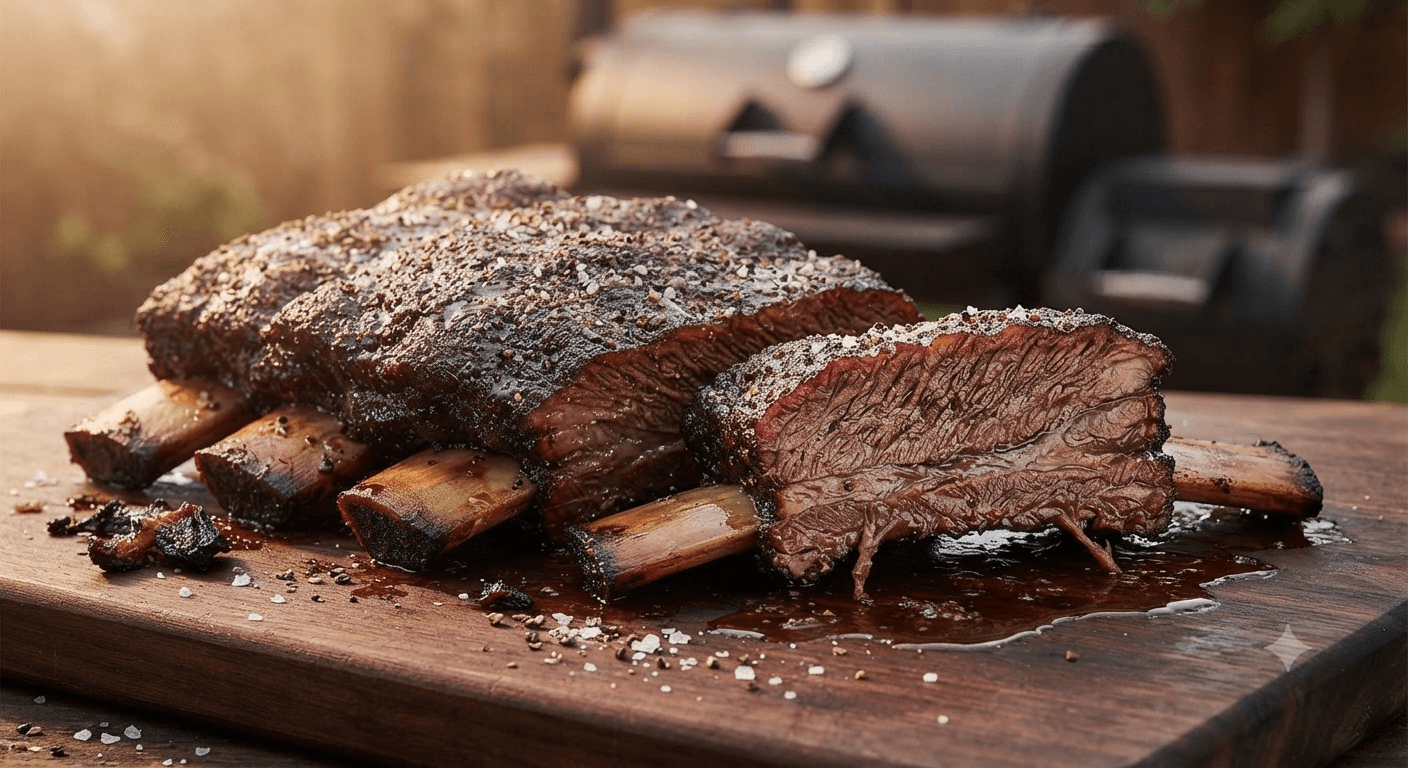
How to Smoke Beef Ribs
Beef ribs can deliver some of the richest barbecue you can make on a smoker. Cooked low and slow, the meat develops a dark bark while the fat and connective tissue gradually render, producing tender, flavorful beef.
Not all beef ribs are the same, though. Plate ribs, chuck short ribs, and beef back ribs differ significantly in size and meatiness, so understanding what you're cooking is important when planning the cook.
Types of Beef Ribs
Beef plate ribs, sometimes called plate short ribs or "dino ribs," are the large, meaty ribs commonly associated with Texas-style barbecue. They're thick, heavily marbled, and can handle a long smoke.
Chuck short ribs are generally smaller than plate ribs but still contain plenty of meat and connective tissue. They respond well to the same low-and-slow approach.
Beef back ribs come from the rib section after the ribeye is removed. They typically have less meat sitting on top of the bones than plate or chuck ribs and may cook considerably faster.
Because these cuts are so different, don't assume every rack of beef ribs will follow the same cooking schedule.
What Temperature Should You Smoke Beef Ribs At?
A smoker temperature around 250°F is an excellent starting point for beef ribs.
This provides enough heat to render fat and break down connective tissue while giving the ribs plenty of time to develop bark and smoke flavor.
Cooking around 225°F can also work, but the cook will generally take longer. Some pitmasters cook beef ribs hotter with excellent results as well.
Whatever temperature you choose, consistency matters more than chasing every small fluctuation in the smoker.
How Long Does It Take to Smoke Beef Ribs?
Cook time varies significantly depending on the type, size, and thickness of the ribs.
Large plate ribs can require a long cook because of their thick layers of meat and connective tissue. Smaller beef back ribs may finish considerably sooner.
Smoker temperature, wrapping, weather, and the individual rack also affect the timeline.
Use weight and rib type to estimate your cook, but don't treat the estimate as a guaranteed finish time. Give yourself extra time and use tenderness to determine when the ribs are actually ready.
Use the Smoker IQ calculator to estimate your beef rib cook based on what you're smoking and how much it weighs.
Understanding the Beef Rib Stall
Large, meaty beef ribs can experience a stall similar to brisket.
The internal temperature may rise steadily and then slow considerably somewhere around 150–170°F, although the exact range varies from cook to cook.
Evaporation from the surface of the meat cools it and can temporarily offset the heat from the smoker.
The stall is normal. You can wait it out or wrap the ribs after the bark has developed if you want to reduce evaporation and move the cook along faster.
Should You Wrap Beef Ribs?
Wrapping beef ribs is optional.
Leaving them unwrapped throughout the cook allows the bark to remain exposed to the smoker and generally produces a firmer exterior.
Butcher paper can reduce moisture loss while preserving more of the bark than foil.
Aluminum foil traps more moisture and can help speed up the cook, but it may soften the bark.
If you wrap, consider the appearance and texture of the bark rather than wrapping automatically at a particular internal temperature.
What Is the Best Wood for Smoking Beef Ribs?
Beef ribs can stand up to stronger smoking woods because of their rich beef flavor.
Oak is one of the best all-around choices. It provides a balanced smoke flavor that complements beef without easily overwhelming it.
Hickory delivers a stronger, traditional barbecue smoke and pairs particularly well with large, fatty beef ribs.
Mesquite provides an intense smoke flavor commonly associated with Texas barbecue. Because it's strong, it can be used sparingly or blended with oak.
Pecan offers a rich but somewhat milder smoke and works well when you want less intensity than hickory or mesquite.
Fruit woods such as cherry can also be blended with stronger hardwoods for additional sweetness and color.
When Are Beef Ribs Done?
Internal temperature is useful for tracking the cook, but tenderness should determine when beef ribs are finished.
Large beef ribs often become tender somewhere around 195–205°F internal temperature, with approximately 203°F serving as a useful reference point.
Don't pull the ribs simply because the thermometer reaches that number.
Probe the thickest part of the meat between the bones. When they're ready, the probe should slide in with very little resistance.
Different racks can become tender at different temperatures, so let the meat make the final decision.
What About the Membrane?
Beef ribs often have a tough membrane on the bone side of the rack.
Unlike pork ribs, where the membrane is commonly removed, many pitmasters leave the membrane on beef ribs. It can help hold the meat and bones together during a long cook.
Any loose or excessively thick pieces can be trimmed, but removing the entire membrane isn't required for good beef ribs.
Resting Beef Ribs
Give large beef ribs time to rest after they come off the smoker.
A rest of at least 30–60 minutes gives the meat time to cool slightly and can make serving easier. Large plate ribs can also handle a longer controlled hold if they finish ahead of schedule.
As with other cooked meats, keep the ribs at a food-safe temperature during an extended hold.
How to Slice Beef Ribs
Large plate ribs are often served as individual bones.
After resting, use a sharp knife to slice between the bones, leaving the meat attached to each rib.
For smaller beef ribs, you can similarly follow the spaces between the bones to divide the rack into individual portions.
Because large beef ribs are extremely rich, one rib can be a substantial serving.
Plan Your Beef Rib Cook with Smoker IQ
The size difference between beef rib cuts makes planning especially important.
Tell Smoker IQ what you're smoking and how much it weighs to get an estimated cook time, recommended smoker temperature, target internal temperature, expected stall range, and wood pairing.
Plan My Cook →
Beef Ribs FAQ
What temperature should I smoke beef ribs at?
Around 250°F is an excellent starting point for beef ribs. Lower temperatures such as 225°F also work but generally increase cooking time.
How long does it take to smoke beef ribs?
It depends heavily on the cut and size. Thick plate ribs can require a long cook, while beef back ribs may finish much sooner. Use estimated time for planning and tenderness to determine when they're done.
At what temperature are beef ribs done?
Large beef ribs often become tender somewhere around 195–205°F, but there is no universal finishing temperature. They're ready when a probe slides into the thickest part of the meat with very little resistance.
Should I wrap beef ribs?
Wrapping is optional. Leaving them unwrapped can produce a firmer bark. Butcher paper reduces moisture loss while preserving more bark, while foil retains more moisture and may shorten the cook.
Should I remove the membrane from beef ribs?
Not necessarily. Many cooks leave the membrane on the bone side of large beef ribs because it can help hold the rack together during cooking.
What wood is best for beef ribs?
Oak is an excellent all-purpose choice. Hickory provides stronger smoke, while mesquite produces an intense flavor that works particularly well with beef when used carefully. Pecan is a good option for a somewhat milder smoke.